Tuesday, 5 May 2026

“Angeke ngishunyayelwe ngumfati” and the Stained-Glass Ceiling: Challenging Patriarchal Exclusion of Women in Eswatini’s Churches


“Angeke ngishunyayelwe ngumfati” and the Stained-Glass Ceiling: Challenging Patriarchal Exclusion of Women in Eswatini’s Churches

Introduction

In many Christian communities across Eswatini, the SiSwati phrase “angeke ngishunyayelwe ngumfati,” I will not be taught or preached to by a woman, is still heard in pews, meeting halls, and in churches. For some men, this expression reflects a deeply ingrained belief that women should not occupy roles of spiritual authority over men, since they feel she does not fit or qualify for such due to gender marginalization in Swazi men. While often presented as a cultural or biblical imperative, this stance manifests a patriarchal logic rather than an unavoidable theological truth.

Patriarchy and the Church in Eswatini

Across many church denominations in Eswatini and the wider Southern African context, women remain unrepresented in senior leadership roles in churches, which is a phenomenon scholars describe as a “stained-glass ceiling”, which are structural barriers that limit women’s advancement in church hierarchies despite their gifts and calling. Most religious institutions use biblical narratives to support their patriarchal exclusion of women. Scriptures like 1 Corinthians 14:34-35 read thus: “Let your women keep silence in the churches: for it is not permitted unto them to speak; but they are commanded to be under obedience, as also saith the law. And if they will learn anything, let them ask their husbands at home: for it is a shame for women to speak in the church” (KJV). This verse is interpreted in a way that gives men power to silence the voices of women in the church, which the context of the verse does not imply what they literally mean in the context of the verse.

Using a feminist approach to read such scriptures can lead to an understanding of the responsibilities the church and society have in inspiring women to take a lead and serve God like all men. This is supported by Resane (2024), who rightly observed that patriarchal readings rooted in cultural norms have contributed to the marginalization of women by selectively interpreting Paul’s writings to justify limited participation and leadership roles for women in worship. In some of Paul’s letters, women pray and prophesy publicly, for example, (RSV, 1 Corinthians 11:5) “But every woman that prayeth or prophesieth…” and with Pauline narratives that recognize women in active ministry roles like Phoebe, who was a deacon as narrated in Romans 16:1.

One of the strongest and widely cited Pauline passages that is used as a justification for restricting women from teaching, preaching, and occupying church leadership roles is 1 (KJV, Timothy 2:11-12) “Let the woman learn in silence with all subjection. But I suffer not a woman to teach, nor to usurp authority over the man, but to be in silence.” This verse is misinterpreted because the context in which it was referring does not apply to the local context, and some scholars may even argue the originality of the meaning of the text. The same author of the Epistles in 1 Timothy 3:2 states that an overseer must be a husband of one wife, which, according to Korsah (2021), is a text that has been used to either ordain or avoid the ordination of women as church clergy. This shows how deeply the Bible has been used as a tool of women's oppression even in the church.

Globally, women lead nearly one-third of congregations in some Christian traditions, yet their presence fades at higher clerical ranks such as bishop or senior pastor (Holzinger, 2015). This shows that the challenge of undermining women even in the spheres of the church is also a global phenomenon, not just locally inclined. Such a statement shows the work that needs to be done by societies insofar as removing socially constructed barriers that limit women's growth. Some feminists have gone as far as opting for the total rejection of the Bible altogether, while some have the view that it needs to be interpreted by focusing on those texts that portray women positively instead of focusing on the negatives (Osiek, 1997).

A landmark example from Eswatini illustrates this dynamic. Pastor Zanele Shongwe, a senior leader within her denomination and the wife of a founder of one of the big charismatic churches in Eswatini, shared that resistance to her leadership often came not only from men but at times even from women influenced by gender bias rather than capability. Nevertheless, she stated: “I have accepted that some people will be for me and some not quite there … But I am grateful for those who support me with their prayers. Everyone is God’s child, those who say hurtful things to me and those who encourage me.” (Eswatini Observer, as cited in FlipHTML5, 2025). This is evidence that the society itself has accepted this gender sickness of undermining women as if they are lacking something to take church leadership roles. A clear fact is that most women have risen to the occasion when it comes to self-empowerment; they are highly educated and poses very good leadership skills than some male leaders.

Pastor Zanele’s testimony underscores how patriarchal exclusion affects both women leaders and the congregations they serve, not because of a lack of calling, but because of entrenched cultural and institutional norms. Social Constructionism Theory clearly articulates that norms and “truths” are socially constructed through interaction, tradition, and repetition; they are not fixed or natural. This is very true in this case because the patriarchal society has greatly encroached on the church to influence unacceptable gender imbalances to be accepted as normal by even the same women they oppress.

Voices from Local Church Leaders and Ministries

While resistance persists in some quarters, other leaders and ministries within Eswatini are pushing back against exclusionary norms. Women in Eswatini Baptist churches have organized training groups and ministries that equip women for discipleship and service, demonstrating commitment to spiritual growth beyond rigid gender roles (Smith, 2022). Leaders engaged in church forums throughout Eswatini emphasize that women must be encouraged to take on leadership roles and that reshaping perceptions about gender and authority is critical for both church health and community development (Eswatini Church Forum, 2026). Broader gender advocacy within Eswatini, including within faith-based forums, has highlighted how some male clergy misinterpret scriptures to confine women to subordinate roles, urging reinterpretation grounded in equality and mutual respect (Gender Links, 2015). These voices represent a shift in narrative that challenges the assumption behind “angeke ngishunyayelwe ngumfati” as a fixed religious truth and instead highlights a theology of partnership and shared ministry. Such efforts are supported by African Feminist Theology, whose scholarly works clearly advocate that religious texts and practices must be examined for gender bias and reinterpreted to affirm women’s full humanity and calling.

Theological and Social Considerations

Scholarship in African feminist theology has long critiqued patriarchal interpretations of scripture and church practice. African theologian Mercy Amba Oduyoye, a Ghanaian scholar, argues that churches must confront and move beyond structures that contribute to gender inequality, affirming that men and women are equal before God and that women’s roles in the church should not be restricted by cultural patriarchy (Oduyoye, 1934). This must not be seen as an action of doing mercy for women but as a responsibility that the church and society at large must castigate for complete change, so that we can live in a fair environment that treats both genders with equal respect and dignity that they deserve.

Similarly, research on gender and church leadership in Southern Africa has shown that structural gender biases are not a doctrinal necessity; they often shape gendered leadership dynamics. In some cases, women’s leadership is channeled into auxiliary groups such as women’s leagues rather than formal governance roles, maintaining the status quo of male governance (Chisale, 2020). In such cases, it is seen as belittling their abilities to occupy leadership positions. In addition, Musa Wenkosi Dube, a Botswana-based feminist scholar, argues that biblical interpretation should confront patriarchy and colonial influences simultaneously. Feminist postcolonial readings can transform how scripture is used in power structures like church leadership. (Dube & Wafula, 2017).

Sonene Nyawo from Eswatini, who has greatly contributed as an Eswatini feminist scholar, foregrounds in her research how religio-cultural constructions influence gendered identities and access to power in church and society, particularly in patriarchal contexts like Eswatini. She explores topics including women’s leadership, reproductive rights, gender-based violence, and sustainable development through a feminist lens, advocating for theological frameworks that challenge restrictive norms (Nyawo, 2020). Her key contributions are that gender norms in religion intersect with family, law, and society to shape women’s lived realities. Also, feminist theological inquiry is essential in reimagining church leadership and social justice (Nyawo, 2020). This is very encouraging to see highly educated and liberated women like her contributing such deep insights to academic work, which shapes how local hierarchies inside and outside of the church think about women and their roles outside of the kitchen.

The Broader African Perspective

Despite these common challenges faced by women in the church, some are thriving in such conditions of exclusion and patriarchal objectification. One example is that of Bishop Margaret Wanjira of Jesus Is Alive Ministries in Kenya, who has thrived in ministry for some time, though she confessed that she had been subjected to insults due to her status (Mwaura, 2005). She is an unmarried single mother who, according to patriarchal measurements, doesn’t qualify to preach and, let alone, lead a church. It is encouraging to note that some great women are swimming against the tides of marginalization, which (Mwaura, 2005) calls ministerial freedom; they preach, heal, and prophesy in churches (Nyawo, 2020). The work that is being done by feminists can’t go unnoticed in enlightening women to rise from the dustbin of patriarchal neglect to be fully aware of what they can do and to unleash their full potential in them, as far as church leadership roles are concerned.

Another key example of a woman who is making waves in church leadership spheres is that of Bishop Purity Nomthandazo Malinga, who is a South African theologian and church leader who became the first female Presiding Bishop of the Methodist Church of Southern Africa (MCSA). Her historic election in 2019 marked a breakthrough in the denomination’s more than two-century history, symbolizing progress for women in religious leadership (Kumalo, 2020). Her journey to becoming a Presiding Bishop of the biggest mainline denomination in Southern Africa is applauded from a perspective that her nomination breaks the 212-year-old glass ceiling that limited women’s rise into leadership in the MCSA (Kumalo, 2020), this highlights a great breakthrough not for the MCSA church alone but raising hopes of women to the entire church bodies in the African continent and beyond.

The Cost of Exclusion

The exclusion of women from preaching and leadership is not without consequence. Under-utilization of Gifts is one of the cost that comes with the exclusion of women. Women comprise the majority of church membership in many Eswatini congregations, yet their representation in ordained or senior roles remains disproportionately low, which is a disconnection between participation and authority. Another effect of exclusion is modeling inequity, when young girls never see women preach or lead, the church inadvertently teaches that spiritual calling is gendered, which has negative consequences for societal norms. Discouraging discernment is also one of the costs that come with the exclusion of women because talented women who might pursue theological education or ministry leadership can be deterred when local norms suggest their preaching will not be accepted. It is why scholars like Claassens (2024) have challenged the disempowerment notions of womanhood as embedded in African cultures. It is very important to empower women to lead in churches, as they are part of the human race, lacking anything to qualify them for any leadership or preaching roles in the church.

Toward Inclusive Church Practice

To move beyond the restrictive interpretation encapsulated by “angeke ngishunyayelwe ngumfati,” churches in Eswatini might consider the following. Intentional training and mentorship for women in ministry and theology, recognizing their callings as equal partners in gospel proclamation. (Claassens, 2024) rightly suggest that the use of reinterpretation of the Book of Ruth to give a voice to the real-life experiences of ordinary women who are struggling to survive exclusion in the church. The use of dialogues on gender, scripture, and ecclesiology that distinguish cultural norms from biblical teaching can also help to remove the terror in the Bible (Thiede & Stiebert, 2025), which is full of objectification of women, let alone their abuse and exploitation by men, like in the story of Tamar, who was raped by Amnon. Lastly, institutional reforms that remove structural barriers to women’s advancement in leadership need to be done to have an inclusive church that doesn’t undermine women, but that sees them as imago dei which means the image of God.

Conclusion

“Angeke ngishunyayelwe ngumfati” reflects a cultural sentiment deeply embedded in some Eswatini church contexts, but it should not be mistaken for unchallenged biblical truth. By amplifying the voices of women leaders like Pastor Zanele, engaging with theological frameworks that affirm equal calling, and empirically confronting the barriers women face, the church in Eswatini can practice a more faithful and inclusive model of discipleship and leadership. With feminist voices being amplified, the works of Eswatini feminists like Sonene Nyawo give hope for a more inclusive church that does not undermine the efforts and abilities of women. 

References

Chisale, S. S. (2020). “Deliver us from patriarchy”: A gendered perspective of the Evangelical Lutheran Church in Southern Africa and implications for pastoral care. Verbum et Ecclesia, 41(1).

Claassens, L. J. M. (2024). Reinterpreting the Book of Ruth: African women’s survival and theological agency.

Dube, M. W., & Wafula, R. S. (2017). Postcoloniality, translation, and the Bible in Africa. Pickwick Publications.

Eswatini Church Forum. (2026). Mission and vision. https://eswatinichurchforum.org/

Gender Links. (2015, July 9). Swaziland: Addressing patriarchy in Swaziland. https://www.genderlinks.org.za/knowledge-hub/news/swaziland-addressing-patriarchy-in-swaziland-2015-07-09/

Haji, N. (2025, February 24). Title of article about Pastor Zanele. Eswatini Observer.

Holzinger, I. (2015). Women’s leadership in Christian congregations and denominations: Data summary on women leaders.

Korsah, K. (2021). Women, ordination, and biblical interpretation in contemporary African Christianity.

Kumalo, S. (2020). From Cabazi to Bruma: Purity Malinga’s rise to presiding bishop of the Methodist Church of Southern Africa. Studia Historiae Ecclesiasticae, 46(1).

Mwaura, P. N. (2005). Gender and power in African Christianity: African instituted churches and Pentecostal churches. In O. Kalu (Ed.), African Christianity: An African story. University of Pretoria.

Nyawo, S. (2020). Women’s leadership and participation in recent Christian formations in Swaziland: Reshaping the patriarchal agenda?

Oduyoye, M. A. (1995). Daughters of Anowa: African women and patriarchy. Orbis Books.

Osiek, C. (1997). The feminist and the Bible: Hermeneutical approaches.

Resane, K. T. (2024). Patriarchal readings of Paul and the marginalization of women in African churches.

Smith, L. D. (2022). Eswatini Baptist women fostering groups and discipleship.

Thiede, B., & Stiebert, J. (2025). Gender violence and biblical terror texts: Rereading narratives of abuse in scripture.

Wednesday, 9 October 2024

Importance of teaching Religious Education in schools

 Religious education in schools plays a significant role in the holistic development of students and society as a whole. Here are several key reasons why it is important:


1. Cultural Understanding

Diversity Awareness: Religious education fosters an understanding of various beliefs and practices, promoting awareness and appreciation of cultural diversity.

Social Cohesion: It can help build bridges between different communities by encouraging respect and understanding, which are vital in increasingly multicultural societies.


2. Ethical and Moral Development

 Value Formation: Religious education often emphasizes moral and ethical teachings, helping students to develop a strong moral compass.

Critical Thinking: It encourages students to consider complex moral and ethical issues, fostering critical thinking and personal reflection.


3. Identity and Personal Growth

Self-Discovery: Learning about different religions can help students explore their own beliefs and values, contributing to their personal identity and development.

 Purpose and Meaning: Engaging with religious perspectives can provide students with insights into life's bigger questions, promoting a sense of purpose and meaning.


4. Social Skills and Empathy

Interpersonal Skills: Discussions about religious beliefs can enhance students' communication and interpersonal skills, teaching them how to engage respectfully with differing viewpoints.

Empathy Development: Exposure to diverse religious perspectives can cultivate empathy by encouraging students to understand and appreciate the experiences and beliefs of others.


5. Historical Perspectives

 Understanding Heritage: Religious education provides insights into the historical contexts of various religions, helping students understand the influence of these beliefs on culture, politics, and society throughout history.

 Critical Historical Analysis: It can encourage students to analyze past events critically, considering the role of religion and belief systems in shaping historical narratives.


6. Community and Belonging

Fostering Community: Religious education can create a sense of community within the school by encouraging shared values and mutual respect among students of different backgrounds.

Engagement in Dialogue: It promotes dialogue and collaboration among students, teachers, and families, enhancing the school environment.


7. Preparing for Global Citizenship

Global Awareness: In a globalized world, understanding religious diversity is essential for effective communication and interaction on a global scale.

Conflict Resolution Skills: By studying religious differences, students can develop skills to navigate and resolve conflicts that arise from differing beliefs.


8. Academic Benefits

Interdisciplinary Learning: Religious education can intersect with subjects like history, philosophy, literature, and social studies, enriching the academic curriculum.

Engagement in Learning: Students often find learning about religion engaging, which can enhance their overall school experience.


Conclusion

Incorporating religious education into school curricula can contribute positively to individual and societal development. It equips students with the skills and understanding needed to thrive in a diverse world, encouraging them not only to be knowledgeable about different beliefs but also to practice tolerance, empathy, and respect for others.

Tuesday, 1 October 2024

ICT Education in Schools

 The Importance of ICT Education in Schools

In today's digital age, the integration of Information and Communication Technology (ICT) education in schools has become increasingly critical. As technology continues to evolve, equipping students with essential ICT skills is paramount for their future success in various fields. This article explores the significance of ICT education in schools, focusing on its impact on learning, career readiness, and societal engagement.

ICT Education workshop 2024 at Dvokolwako High School

Enhancing Learning Experiences

ICT education enhances learning experiences by making lessons more interactive and engaging. Digital tools and multimedia resources can transform traditional teaching methods, enabling students to learn in ways that resonate with their interests and learning styles. According to the World Economic Forum, 85% of the jobs that will exist in 2030 have not yet been invented, emphasizing the need for educational systems to adapt and incorporate technology into their curricula (World Economic Forum, 2016).

Through ICT, educators can utilize online resources, educational software, and collaborative platforms, promoting an active learning environment. This not only helps in the retention of information but also encourages critical thinking and problem-solving skills among students (He, 2019). For instance, platforms like Google Classroom and educational apps have transformed the way teachers deliver content and assess student learning.


Preparing Students for the Workforce

Incorporating ICT education is essential for preparing students for the workforce. The job market today demands proficiency in various technological tools and platforms. A study by the International Society for Technology in Education (ISTE) indicates that digital literacy is among the top skills employers seek (ISTE, 2020). By integrating ICT into the curriculum from an early age, schools can ensure that students are not only familiar with technology but also adept at using it effectively in professional settings.

Moreover, ICT education fosters a range of competencies, including communication, collaboration, and creativity. For instance, students who engage in coding and programming projects develop problem-solving skills and logical reasoning, which are highly valued in careers in science, technology, engineering, and mathematics (STEM) fields (Partnership for 21st Century Skills, 2011).


Promoting Digital Citizenship and Responsibility

As students become more immersed in technology, it is crucial to teach them about digital citizenship and online responsibility. ICT education encompasses understanding the ethical implications of technology use, such as issues related to privacy, intellectual property, and online safety. Equipping students with knowledge about responsible technology use prepares them to navigate the complexities of the digital world responsibly.


According to the Digital Citizenship Institute, teaching digital citizenship helps students develop critical skills needed to engage positively and productively in an increasingly connected society (Digital Citizenship Institute, 2021). This education helps foster a generation that not only uses technology effectively but also understands its societal impacts and responsibilities.


Conclusion

The importance of ICT education in schools cannot be overstated. It enhances learning experiences, prepares students for the workforce, and promotes responsible technology use. As we continue to navigate a rapidly changing technological landscape, educational systems must prioritize ICT integration into curricula to equip students with the skills and knowledge they need to thrive in the digital age. The future workforce will depend on the ability to adapt to new technologies, and it is the responsibility of educators to prepare students for this reality.


References

Digital Citizenship Institute. (2021). What is Digital Citizenship? [Digital Citizenship Institute](https://www.digitalcitizenship.net)

He, W. (2019). The Role of ICT in Education: A Review of the Literature. *Education and Information Technologies*, 24(2), 1-24.

International Society for Technology in Education (ISTE). (2020). The Future of Work: The Role of Learning Technology. [ISTE](https://www.iste.org)

Partnership for 21st Century Skills. (2011). Framework for 21st Century Learning. [P21](http://www.p21.org)

World Economic Forum. (2016). The Future of Jobs: Employment, Skills, and Workforce Strategy for the Fourth Industrial Revolution. [WEF](https://www.weforum.org)


Integrating ICT education into schools is not just an option; it is a necessity that will shape the future of our students, empowering them to meet the challenges of tomorrow.

Saturday, 6 July 2024

IMPORTANCE OF USING VIDEO CLIPS DURING TEACHING AND LEARNING

Importance of using video clips during teaching and learning

By Bongani Mhlanga

Using video clips during teaching and learning can be an effective tool for enhancing comprehension, engagement, and retention of information (EdSurge, 2024). As a Teacher and a University Tutor, I have identified the positive impact of such.


The learning environment just changes and the atmosphere is saturated with willingness to learn, and curiosity to link the video with the already-known content. This is very interesting. The tricky part of it is that it needs thorough preparation, time consideration, and classroom management skills. There has to be teaching and learning from setting up and selecting the video till the end of the session. Tertiary students are more independent and ready compared to high school learners from my experience, it is therefore paramount to be cognizant of the nature and cognitive level of your learners when you are to use such.

Here are some reasons why incorporating video clips into your teaching strategies can be beneficial:

1. Visual aid:

Video clips provide a visual representation of concepts and ideas, making it easier for students to understand and grasp complex information. Visual aids can help to clarify difficult concepts, stimulate interest, and reinforce learning. When teaching Religious Education in schools, we have to think about a way to give our learners a visual picture of the incidents. This is because some of the stories are too complicated to understand and hence video clips can be so helpful. For example, we have to show them the Annunciation to Mary, and Zachariah, the birth stories, and all the miracles that are in the syllabus. Remember that our learners learn from the known to the unknown, so it is highly likely to help them in the recall skills; that is to remember the events of the story if they have seen them. This is echoed by the new theory of learning called ‘Connectivism’. Teachers can utilize connectivism in their classrooms to help students make connections to things that excite them, helping them learn. Teachers can use digital media to make good, positive connections to learning (Western Governors University, 2020).

2. Engagement:

Video clips can capture students' attention and engage them in the learning process. The use of multimedia content can be more interesting and interactive than traditional text-based learning materials, keeping students engaged and motivated to learn. This is emphasized by the above-mentioned theory. Learners can engage and participate with a clear picture of what the subject matter is all about rather than getting it from the text.

3. Real-world application:

Video clips can show real-world examples, case studies, and applications of theoretical concepts, making learning more relevant and practical for students. By seeing how concepts are applied in real life, students can better understand the importance and relevance of what they are learning.

4. Multisensory learning:

Multisensory activities are based on whole-brain learning, which is the belief that the best way to teach concepts is by involving multiple areas in the brain (Waterford, 2019). Video clips engage different senses, such as visual and auditory, which can enhance learning for students with diverse learning styles. Watching a video can activate multiple parts of the brain, leading to improved attention, processing, and retention of information. When we facilitate teaching and learning in a classroom or lecture situation, the ear and eyes are the only senses that are used, but when we use a video clip, some emotions are provoked, which is why some will be laughing, so quiet to emotional moments, applying sympathy. This cannot be easily achieved without the use of video clips in teaching and learning situations.

5. Personalization:

Video clips can be customized to meet the specific needs and interests of students, allowing for personalized learning experiences Lee, B. (2019). Teachers can choose videos that cater to different learning styles, preferences, and abilities, making the learning more individualized and effective. We do so as educators being informed by the nature of our learners in our minds, for example, we cannot choose Cartoons video clips for high school learners, or choose videos that are in the French language when our learners do not understand the French language, it is therefore advisable for educators to take time and watch the video clips before taking them to class.

Overall, using video clips during teaching and learning can enrich the educational experience, foster deeper understanding, and enhance student engagement and retention of information. By incorporating multimedia content into your lessons, you can create a dynamic learning environment that promotes active learning and facilitates student success.

Tuesday, 23 January 2024

Why was the Gospel according to Luke included in the New Testament?


Pham D. P. (2015)


The Gospel according to Luke was included in the New Testament because it describes the life and ministry of Jesus Christ. It was written by Luke, Gentile physician and a travelling companion of Paul. The Early Church was concerned about reliability and accuracy of the authors since there were many false Gospels in circulation in biblical Palestine. In this unit, we shall look at the authorship of the Gospel, as well as the sources that Luke used to write the Gospel. This will help us understand why the leaders of the Early Church decided to include this Gospel in the New Testament.


Pham. D. P. (11 November 2015). Synoptic Gospels-Sacred Heart of Jesus Christ, Vietnamese, Carrollton-11/4/ & 11/11. Accesses date: 23 January 2024 https://www.cathdal.org/catechetical-calendar-viewdetails?id=2670&recurrence_number=1

Tuesday, 27 September 2022

Managing Tertiary Institutions’ Academic Burnout Throughout a Semester

 Being admitted to a tertiary institution is one of the most celebrated achievements for students. Wrapped in that celebration is bunch of semester burnout that leaves some tertiary students with anxiety, depression, stress and some even commit suicide or die of stress related sicknesses.

According to The Health Mind Study, in almost 33,000 college students in the United States, 50% had depression or anxiety or both. This is due to the pressure of striking a balance between social life and the demands of the academic calendar. Tertiary students usually have deadlines to meet. They have to submit assignments, write tests, prepare for the exams as well as proposals and projects.

Burnouts comes in different packages for students. Whether it’s handling the seemingly never-ending influx of work during term time, the lead up to an essay deadline or a brief but anxiety-inducing exam period, it can get to a point where it’s all just too much (Howatson-Tout, 2022). Depression needs to be given more attention since it can have an impact in the lives of the students. In some cases, such can lead to suicidal thoughts (Klein & VanDerBill, 2021)


Tips on how to survive academic burnout:

1. Work on your assignments right away, don’t wait for the deadlines

Figure 1[jivcollegecounseling.com]


Some students tend to bank tasks given to them by the professors. Sometimes it is due to a distant due date yet in between are so many tasks that might also come up and end up preoccupying the student to the point that they can’t meet the deadlines.


2. Have time to rest

Figure 2 [Adobe Stock]
Figure 3 [Adobe Stock]


The pressure that comes with high expectations and the fear of losing scholarship, supplementing or repeating a course can make a student to have sleepless nights. The pressure can make them to feel guilty every time they think of taking some rest. According to Rest and Recharge article published on the 19th of May 2022, rest is important to ensure that your body and mind are able to perform effectively.


3. Avoid using high caffeine products

Figure 4 [The Daily Utah Chronicle]


Fatigue is very common when people do not have enough rest. To counter fatigue, students end up using high caffeine products like strong coffee, energy drinks and supplements. They use such to force the tired body to continue working on assignments, exams and projects. The result may not be as good as one may have expected due to the unhealthy products they use when dealing with pressure.


4. Ask for help

Figure 5 [Skippichard.com]


Tertiary students need to talk to friends, family members or the tertiary counsellors when they have so much on them. It helps to reduce the stress and sometimes leads to solutions and getting the rightful help needed.


REFERENCES

Eisenberg, D., Lipson, S.K., Heinze, J., Zhou, S., Talaski, A. & Person, A. (2020) The Health Minds Study: Fall 2020 Data Report.

Howatson-Tout, K. (2022). Students Reveal their tips for surviving university burnout.

Klein, A & VanDerBill, B. (2021). What to know about depression in students.

Friday, 3 June 2022

An Online Marking Rubric Template


ICT ONLINE LESSON MARKING RUBRIC

Course Instructor’s name

Bongani Mhlanga

Course

Introduction to Computers

Date

28 May 2022

Time

Different times schedules from 10am to 5pm

Topic

Computer Storage

Lesson Title

Storage devices

Level

IDE Year 1 semester 1

Lesson Duration

 40 minutes

Lesson Total Marks for the lesson

40 Marks

Video-conferencing platform

Zoom Cloud Meeting

Prior knowledge/skills expected/assumed from the learners

-Know how to use gadgets for communication purposes.

-Have general understanding of Zoom Cloud Meeting.

-Know basic computer storages.

Lesson Objectives; By the end of the lessons the learner should be able to;


-Define computer storage.

-List at least 5 removable storage devices.

-List at least 2 non-removable storage devices.

-Explain and analyse the functions of a computer storage.

Assessment methods:


-Instructor evaluation of group performance

-Written work assessment using a quiz, group assignments and a group presentation document (Demonstrates knowledge of important content, show analysis, application, synthesis, and evaluation capabilities)

-Presentation skills (Demonstration of acquired skills, demonstration of ability to work collaboratively)

Course Instructor Preparation:

-Schedule and send Zoom meeting’s link to all the learner’s different groups prior to the actual date.

-Make sure that there is no clashing of scheduled times for the groups and short breaks between presentation.

-Network stability and fully charge gadget before meeting.

-Arrange with leaners about the most appropriate time for all presenting groups.

Lesson Development (timed steps and activities):

-5min (logging in) All learners

-3min (instruction and expectations) Facilitator

-10min (presentations by groups) Participating group

-2min (comments and observations) Facilitator

-5min (question and answer session) All learners

-3min (points emphasis and summary) Facilitator

-7min (assessment) Learners


Step

Marks

Course Instructor Activities

Learner Activities

Preparation


Accepting learners to the meeting

Learners are joining Zoom meeting

Introduction/Icebreaker


-Phone memory is full message on my phone, what could be possible problems with my phone and how can it be fixed?

-Introduce today’s topic.

-State instructions and expectations.

-Learners respond to the question that its storage is full and needs formatting or inserting a memory card for storage.

Body (with at least three steps – indicating active learning from learners)

A good presentation:

*Good PowerPoint Presentation design = (5marks)

*Clear definition = (2marks)

*Examples (3 internal storage & 5 external storage) = (8marks)


*Clear explanation of a function = (2marks)


*Good presentation and active participation per group =

(1 mark)


*Active participation =

(2 marks)

Step 1 - Groups present their work using screen sharing their PowerPoint presentations.

-Defining computer storage.


-Explain and list examples of internal storage and external storage.


-Explain functions of a computer storage.


Step 2 – Facilitator’s comments on the presentations


Step 3 – Question and answer/comments from learners.


-Storage is a process through which digital data is saved within a data storage device by means of computing technology.


-Removable storage is that which can be removed from the computer after storing data to it.

-Internal storage is that which cannot be removed from the computer.

-Examples of internal storage include hard drive (HD), Read Only Memory (ROM), Random Access Memory (RAM)

-Examples of external storage include flash drive, compatible disk drive (CD), phone, digital video display drive (DVD)

-Computer storage stores processed data temporarily or permanently.


-Learners take notes of facilitators comments.


-Students make comments and are given the opportunity to ask questions where they need clarity and make comments on the presentation.

Summary


-Facilitator emphasise the definition of storage.

-Emphasise the meaning of internal and external storage with examples and the function of computer storage.

-Students take notes

Formative assessment tasks QUIZ (Assessing individuals)

Facilitator instruct students to write responses to the following questions on the comments box:

*What is your definition of a computer storage? (3 marks)

*What is the function of a computer storage? (3 marks)

*Write 2 examples of internal and external storage. 1mark/example (4marks)

Total Marks for quiz = 10 marks

Conclusion

Thank the learners for the presentations and efforts made and encourage peer learning.

Take home tasks (Summative assessment)

In groups of 4, analyse the importance of storage to a computer device using Google Docs.

Submit (after the approval of the facilitator) via WhatsApp or email as PDF (10 marks) to be part of the student CA at the end of the semester


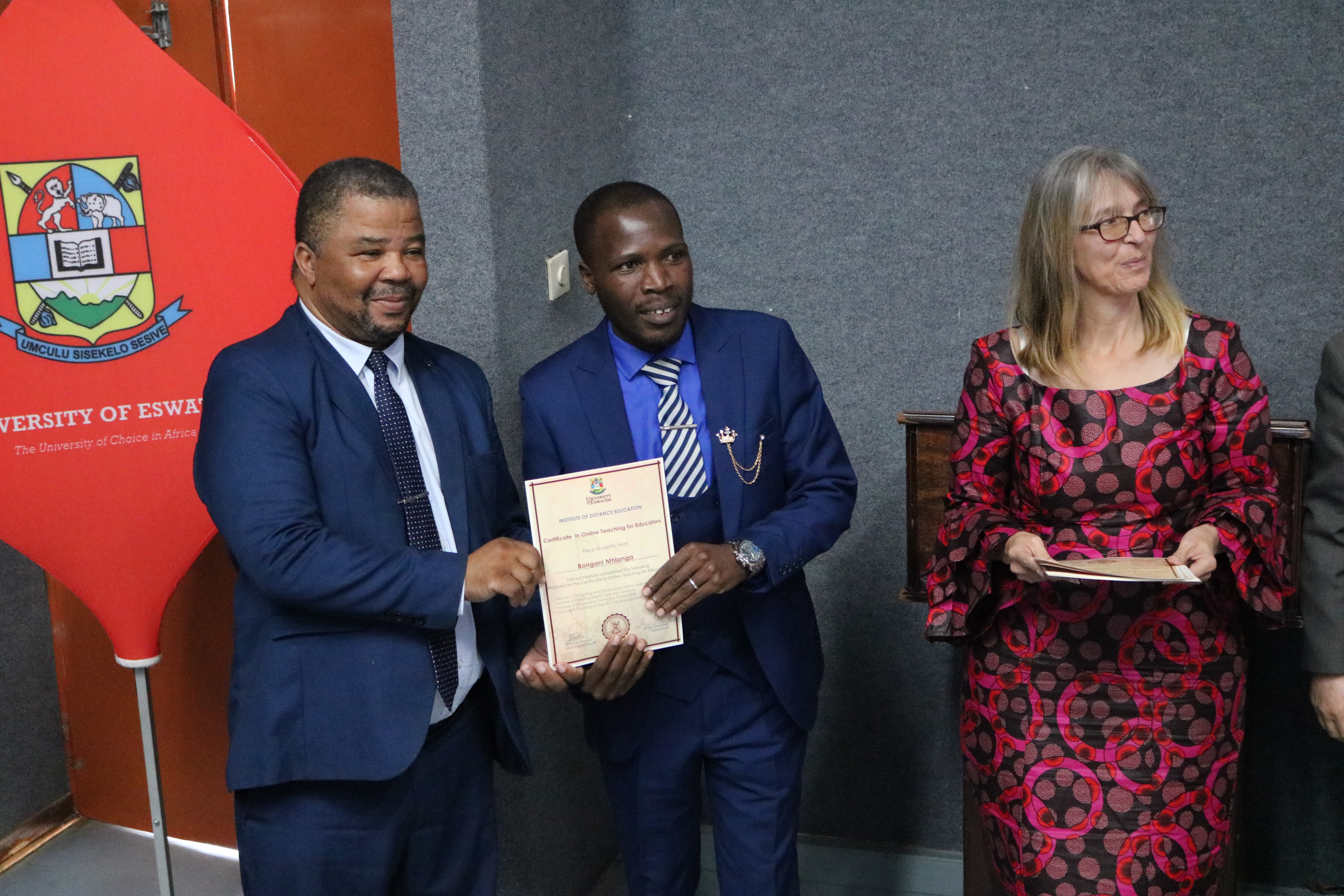
COTE Certificate handover by Professor Justice Thwala & Professor Karen Ferreira-Meyers